More data. Same deadline. What's your plan?
Read more
Over the past two years, artificial intelligence has moved from research labs into everyday tools.
Large language models can generate text, summarize documents, analyze data, and write software. The pace of improvement has been extraordinary, and largely misunderstood.
Most discussions about AI still focus on a single question:
How powerful will the models become?
In my view, that’s only part of the story. The more important question is more subtle, and the answer will determine which professional service firms thrive in the next decade. How does AI change the way professional work is performed?
Few sectors will feel this shift more than professional services.
Professional Services Are Built on Structured Work
Professional work typically follows structured processes: scoping an engagement, gathering evidence, performing analysis, documenting findings, applying judgement and signing off.
These workflows exist for a reason.
They ensure that work is performed consistently, reviewed appropriately, and ultimately trusted by clients, regulators, and markets.
For decades, technology has supported pieces of these processes. Software helped professionals work faster, store documents more easily, and collaborate more efficiently.
But the underlying workflow remained largely human-driven.
AI is beginning to change that.
From Tools to Intelligent Workflows
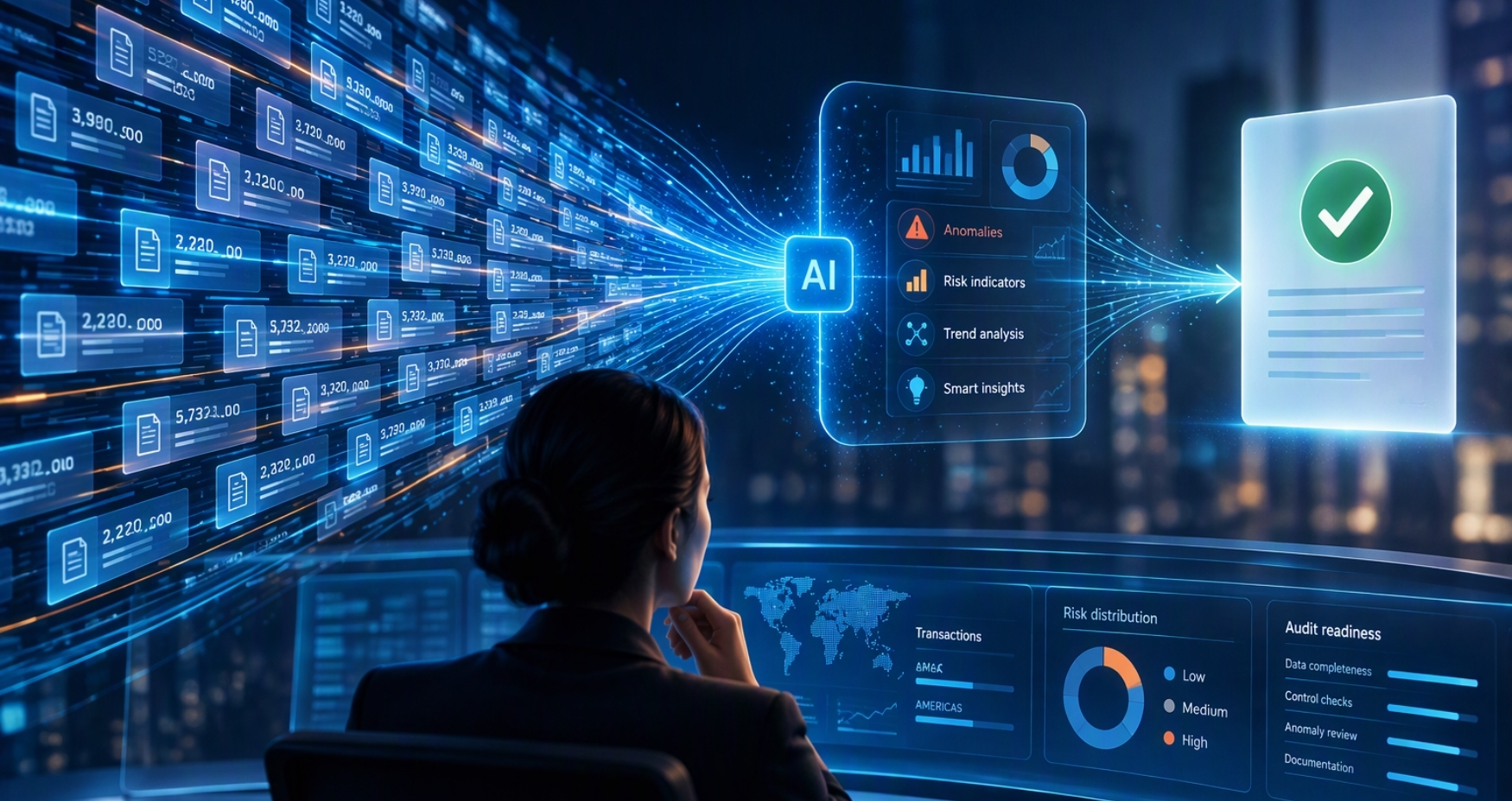
Most early AI applications have focused on individual tasks. They draft documents, summarize reports, extract information and flag anomalies.
These capabilities are impressive. But they largely in service of the execution of the task, assisting individuals rather than transforming the workflow itself.
The next phase of AI will be different.
Instead of simply helping professionals’ complete tasks, AI will increasingly operate within the workflow itself.
Imagine systems that can:
In other words, the professional doesn’t just use the tool.
They operate within a system the AI helps to optimize.
From Assistants to Agents
Another way to understand this shift is the movement from AI assistants to AI agents.
An assistant responds to prompts. An agent takes action.
An assistant might help summarize a client document. An agent retrieves it, analyzes it, compares it against prior-year work, flags inconsistencies, documents findings, and queues it for human review.
When AI operates this way, it becomes far more deeply integrated into professional work.
But this raises an important point.
Intelligence Alone Is Not Enough
In many industries, speed and automation are the primary goals.
Professional services is different.
The work performed by auditors, accountants, tax professionals, and compliance experts must ultimately be trusted.
Clients rely on it. Regulators rely on it. Capital markets rely on it.
That means AI systems operating in these environments must do more than simply produce intelligent outputs.
They must operate within frameworks that ensure consistency, preserve accountability, generate documentation with a human in the loop at every decision point that matters.
In other words, the future of AI in professional services will depend not just on intelligence - but on trust.
The Next Chapter
Over the coming weeks, I’ll share a series of perspectives on how AI is reshaping professional services.
Some of the topics I’ll explore include:
These ideas form what I have started calling the AI Trust Stack: a framework for understanding how AI must operate inside professional workflows where trust, accountability, and professional judgment are essential.
Because while AI technology is advancing rapidly, the values that define professional work - independence, judgment, and trust - remain constant.
The real opportunity ahead is not simply to apply AI to professional services.
It’s to build systems where intelligence and trust can operate together.
That’s the harder problem. And it’s one worth solving.