The AI Race Is Accelerating. Professional Services Will Benefit

Read more
En mi último artículo escribí sobre por qué la inteligencia artificial redefinirá los servicios profesionales, no solo al mejorar las herramientas individuales, sino al integrarse en los flujos de trabajo donde se desarrolla el trabajo profesional.
Ese argumento plantea una pregunta evidente. Si la IA va a trabajar dentro de los procesos de auditoría, contabilidad, impuestos y cumplimiento, ¿qué se necesita en realidad para que resulte de confianza en dichos entornos? Cuando decimos «de confianza» no lo hacemos en un sentido general, sino en el sentido exacto y específico que necesitan los profesionales.
En muchos sectores la respuesta podría ser simplemente precisión y eficiencia. Para los servicios profesionales es diferente.
De los resultados de estas profesiones dependen clientes, organismos reguladores, prestamistas, inversores y mercados de capitales. El trabajo tiene que ser coherente, explicable, estar documentado y ser revisable.
En otras palabras, la inteligencia por sí sola no es suficiente. Los sistemas de IA que operan en entornos profesionales también deben respaldar las condiciones que permitan llevar a cabo un trabajo en el que se pueda confiar.
A lo largo del último año he estado afrontando este reto, y a la conclusión que siempre llego es que no se trata de un único problema. Es uno con diferentes capas y que requiere el trabajo conjunto de varios componentes para resolverlo de forma adecuada. A esas capas es lo que he empezado a denominar la pila de confianza de la IA.
Por qué la IA necesita un marco de confianza
La mayoría de las conversaciones sobre la IA se centran, como es comprensible, en qué pueden hacer los modelos y, de hecho, lo que pueden hacer es verdaderamente extraordinario. Los modelos de lenguaje de gran tamaño pueden generar texto, analizar datos y razonar información compleja de una forma que era impensable hace unos años. Estos avances representan un extraordinario salto en la inteligencia.
Si bien, el trabajo profesional no depende únicamente de la inteligencia. Para que el trabajo resulte fiable, los profesionales dependen de algo más que de un resultado capaz. Dependen de sistemas que proporcionen contexto sobre el trabajo que se está llevando a cabo, estructura acerca de cómo se ejecutan las tareas, documentación de la evidencia y las decisiones, así como gobernanza y supervisión en cada etapa.
Estos elementos son el mecanismo que hace que los clientes y los organismos reguladores confíen en las conclusiones profesionales, además de los mercados que calculan el riesgo según estas.
Cuando la IA comienza a participar en los flujos de trabajo profesionales, se aplican también esos mismos requisitos. Esto significa que el futuro de la IA en los servicios profesionales lo definirá no solo qué tan buenos sean los modelos, sino qué sistemas los rodeen.
Las capas de confianza de la IA
La pila de confianza de la IA es mi forma de designar los componentes que deben estar presentes para que la IA funcione de manera eficaz en los entornos profesionales.
En la base está la inteligencia, es decir, los modelos, los sistemas de razonamiento y las capacidades analíticas que permiten a la IA procesar información, generar datos relevantes y llevar a cabo tareas. En este punto es donde se centra el debate actualmente, y con toda la razón, pues sin una inteligencia sólida el resto carece de importancia.
Si bien, la inteligencia por sí sola es pasiva. Puede generar respuestas, pero no actuar. Por ello, la siguiente capa es la de autonomía.
La autonomía es lo que permite a la IA actuar. Planificar, ejecutar y avanzar con el trabajo. Es la diferencia entre un sistema que responde a peticiones y uno que puede llevar a cabo tareas dentro de unos límites establecidos. En los entornos profesionales, esto no significa autonomía sin control, sino ejecución gobernada. Los agentes de IA que pueden operar dentro de unos límites, siguen reglas y toman acciones con significado como parte de un sistema más amplio.
Pero incuso la capacidad de autonomía no basta por sí sola. Por encima está el flujo de trabajo.
El trabajo profesional se desarrolla dentro de procesos estructurados: planificación de encargos, recopilación de evidencia, ejecución de análisis, documentación de hallazgos y realización de revisiones. La IA que opera fuera de estos flujos de trabajo como herramienta independiente, en lugar de participar en el proceso, siempre estará limitada en cuanto a lo que en realidad puede aportar. Es necesario que los agentes estén directamente integrados en dichos flujos de trabajo para crear auténtico valor.
Por encima del flujo de trabajo tenemos el contexto.
El juicio profesional es profundamente contextual. Se basa en años de experiencia acumulada, metodologías profesionales, normas del sector, enfoques específicos de la firma y encargos anteriores. Los sistemas de IA que no cuentan con este contexto trabajan sin la información que los profesionales consideran esencial. Es posible que ofrezcan resultados que parezcan impresionantes en un primer momento, pero cualquier auditor con experiencia reconocería que carecen de algo importante.
En la cima de la pila se encuentra la gobernanza.
El trabajo profesional requiere supervisión, documentación y rendición de cuentas. Es necesaria la transparencia en cuanto a cómo se llega a las conclusiones y cómo se tomaron las decisiones. En profesiones reguladas, la gobernanza no es una capa que se añade al final, sino algo estructural. La IA que opera en estos entornos debe respaldarla desde el principio.
De manera conjunta, estas cinco capas conforman la pila de confianza de la IA. Cada una se construye sobre la anterior y todas son necesarias. Si eliminas una de ellas, la pila no se sostiene.
Por qué es importante
A medida que se acelera la adopción de la IA, la mayoría de las organizaciones están experimentando con herramientas que operan en la capa de inteligencia. Estas herramientas pueden proporcionar demostraciones impresionantes de lo que la IA puede hacer. No obstante, en entornos profesionales, el auténtico reto comienza una vez que finaliza la demostración.
• ¿Cómo accede la IA a la información correcta?
• ¿Dónde realiza su trabajo?
• ¿Cómo se revisan sus resultados?
• ¿Cómo se documentan las decisiones?
• ¿Cómo se conserva la rendición de cuentas?
Sin las capas que rodean la pila de confianza de la IA, incluso los sistemas de IA más potentes tienen dificultades para integrarse de una forma significativa en los flujos de trabajo reales de los profesionales. Son herramientas impresionantes en la periferia del proceso, pero no son participantes fiables del mismo.
Ese es el motivo por el que creo que la siguiente generación de software profesional se definirá no solo por la inteligencia de sus modelos, sino por la calidad de las plataformas en las que operen dichos modelos.
De los asistentes a los agentes
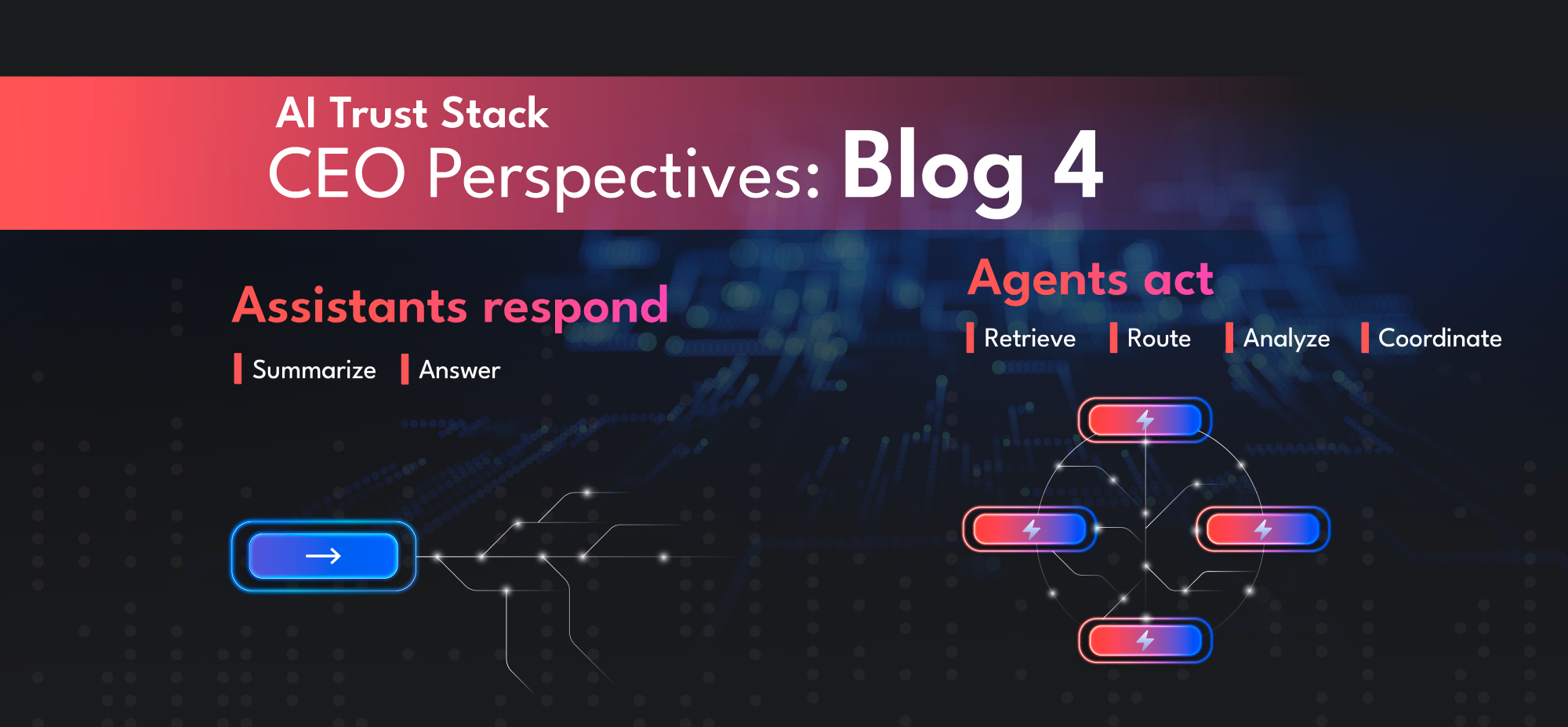
Uno de los desarrollos que encuentro más interesantes ahora mismo es el surgimiento de los agentes de IA, es decir, sistemas capaces de realizar tareas en todos los flujos de trabajo en lugar de simplemente responder peticiones.
Los agentes pueden recuperar información, realizar análisis, generar resultados y avanzar con el trabajo a lo largo de un proceso. El potencial en este sentido es real y significativo, pero para que los agentes operen de forma eficaz en los entornos profesionales, deben funcionar dentro de la pila de confianza de la IA.
Necesitan acceder al flujo de trabajo, basarse en el contexto de trabajo previo y en estructuras de gobernanza que garanticen la rendición de cuentas en cada paso. Sin estas capas, la IA sigue siendo un asistente. Con ellas, la IA comienza a funcionar como participante de los flujos de trabajo profesionales.
El próximo análisis
En las próximas semanas exploraré en profundidad cada una de las capas de la IA.
Plantearé por qué la capa de inteligencia por sí sola no es suficiente, cómo los agentes de IA empezarán a operar dentro de los flujos de trabajo, por qué el contexto es tan crucial para el rendimiento de la IA en la práctica y cómo la gobernanza y la transparencia permiten el tipo de sistemas de IA de confianza que esta profesión necesita.
La inteligencia artificial cambiará sin duda cómo operan los servicios profesionales, pero el reto más importante que tenemos por delante no es simplemente crear sistemas más inteligentes, sino construir sistemas donde la inteligencia y la confianza trabajen juntos. De eso, en última instancia, es de lo que se trata la pila de confianza de la IA.