The AI Race Is Accelerating. Professional Services Will Benefit

Read more
Audit & Assurance
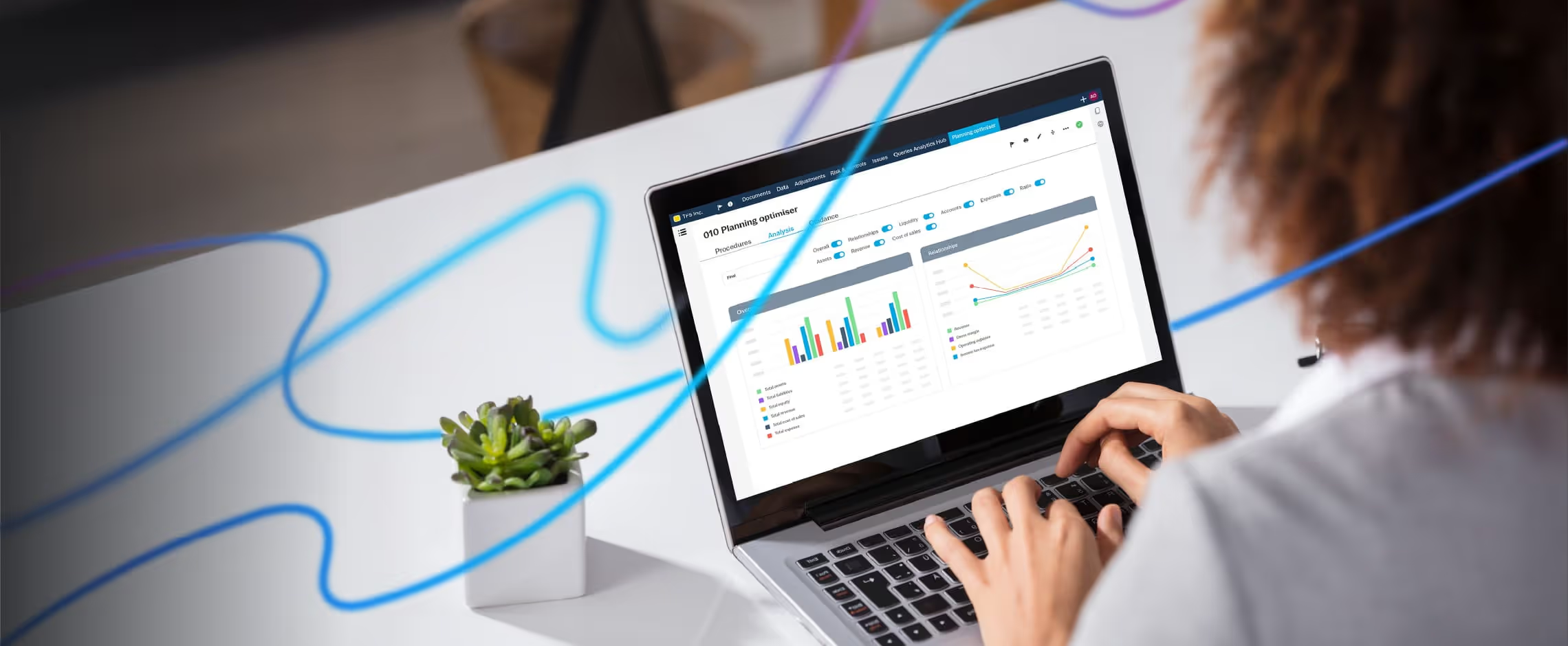
Auditors are turning to data analytics solutions in ever greater numbers so they can analyze more data and transactions, allowing them to improve the quality of their audits. Caseware’s 2023 State of Internal Audit Trends Report found 56 percent of respondents said analytics was a key part of their operations, with another 34 percent planning to use analytics solutions in the future. Just 10 percent had no plans to use analytics.
A 2019 report from the Chartered Professional Accountants of Canada (CPA Canada) discovered the primary goal for auditors using analytics was to improve the quality of audit evidence obtained to support the auditor’s opinion. Some of the most common tasks where auditors employed analytics included:
As the CPA Canada report showed, there are many practical applications for analytics solutions in audit. A few of these include:
Uncovering instances of fraud is one of the best-known use cases for data analytics software. Auditors can set a wide range of thresholds and run different automated tests against millions of transactions to find exceptions and anomalies.
A helpful mathematical law is frequently applied to analytics software to help detect instances of fraud. Known as Benford’s Law, it identifies abnormal distribution of numbers across large data sets. It stipulates that the leading digit in a genuine data set will most often be ‘1’. When other digits from ‘2’ through ‘9’ appear as the leading figure more often than they are expected to, it’s a signal that the data may have been manipulated.
In one case, an auditing firm applied Benford’s Law in their analytics software to uncover fraud taking place at a client who ran a call center. Operators at the facility could issue refunds of under $50 to customers without their manager’s approval.
Forensic accountants ran the Benford’s Law test and discovered a large spike in the number 4. After further investigation, it turned out several operators had been issuing refunds to friends, family and themselves worth hundreds of thousands of dollars, but the fraud was only uncovered after running the automated Benford’s Law test.
There are many more potential use cases for data analytics in auditing. It’s important to note that none of them remove the need for auditors. Instead, they allow auditors to spend less time gathering and formatting information, and more time analyzing the data to generate more accurate forecasts and predictions, helping auditors show their value to C-suite executives.
To learn more about how analytics can free up your team’s time and boost your audit quality, download our whitepaper, Your Guide to Using Analytics Software in Audit and Accounting.