The AI Race Is Accelerating. Professional Services Will Benefit
Read more
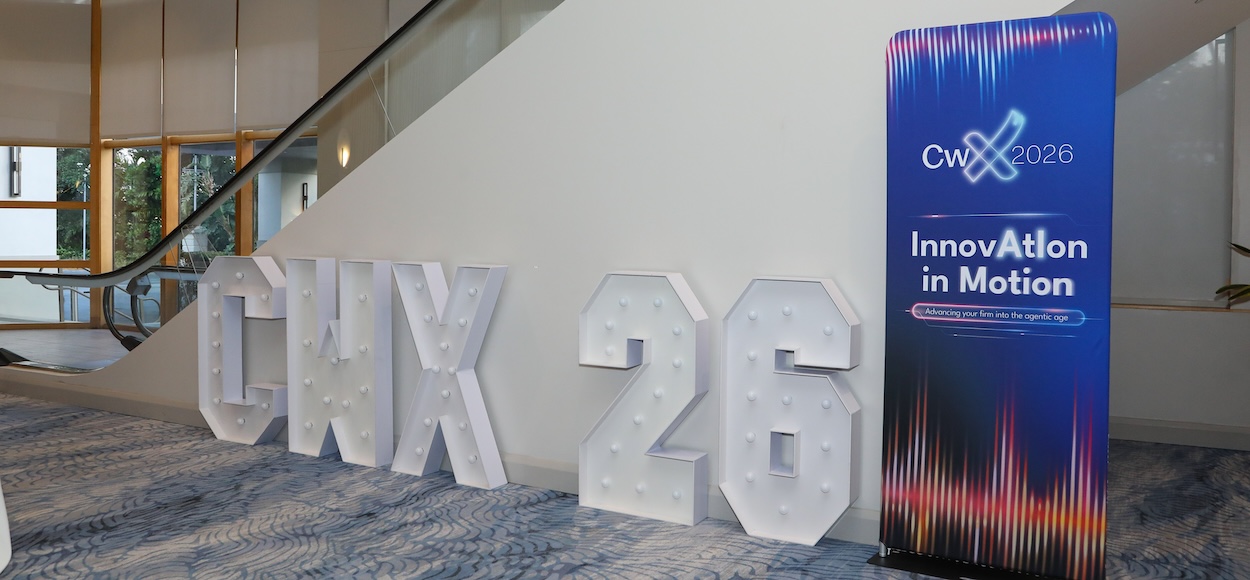
Caseware’s CwX 2026 global flagship conference series launched last month in Fort Lauderdale, FLA, with a focus on agentic AI and Caseware’s latest innovation, Caseware Verity, an agentic intelligence layer built into the Caseware platform.
At a CwX session titled “Unveiling the Next Generation of Caseware AI,” Andrew Smith, Chief Product Officer at Caseware, opened by acknowledging how quickly the AI landscape is moving, and why that pace matters for the profession. The core argument: generic AI tools aren’t enough for assurance. The unique demands of the work, professional judgment applied across an entire engagement, firm methodology that must be respected at every step and the accountability auditors carry, require something purpose-built.
That’s what Caseware Verity is designed to be. It’s built directly into Caseware Cloud, giving audit and assurance teams context-aware guidance to support their workflows, grounded in professional standards, firm methodology and the full context of the engagement they’re working on.
Smith framed three characteristics of assurance work that shape what AI needs to do to be genuinely useful.
Contextual reasoning. An auditor applies professional judgment across an entire engagement including the trial balance, prior year, board minutes and risk assessments. For AI to support that judgment, it needs to reason across that full body of context.
Methodology governance. In assurance, the methodology governs every step, every procedure, every risk response. AI needs to be embedded within that workflow and not layered on top of it.
Professional accountability. Every conclusion, including those shaped by AI, must be defensible under scrutiny. That requires AI outputs to be designed to be traceable and explainable, with the firm in control.
“The AI model matters,” he said, “but in specialized verticals, once you have a frontier model, what surrounds that model and how you fill the domain matters more.”
Smith walked through a planning review scenario to illustrate Caseware Verity in action. A reviewer asks Caseware Verity whether anything was missed during planning. Caseware Verity loads the trial balance, retrieves materiality, reviews identified risks and surfaces a variance with no associated risk attached. With Caseware Verity, that gap is caught at the planning review stage rather than discovered during fieldwork.
“Think of Caseware Verity as a second set of eyes on the engagement,” he explained. “It’s brief, contextual and ready when you are. The review points are still yours to call.”
Alongside Caseware Verity itself, Smith introduced the Caseware Verity Agentic Suites, agents that help streamline specific workflows within the engagement. Three were highlighted.
Disclosure Checklist Agent
The Caseware Verity Disclosure Checklist Agent supports the process of working through a disclosure checklist against draft financial statements. Rather than manually scanning through financials to locate each relevant disclosure, the agent reads the statements and returns citation-backed answers, pointing to where in the financials each answer comes from and providing context for why.
Firms beta testing the Disclosure Checklist Agent reported saving an average of 2.7 hours per disclosure checklist run, with results varying by engagement, according to Caseware's CwX 2026 beta program results.
Firms also found the agent useful as a quality check on completed checklists, in one case surfacing questions that had been answered incorrectly due to misinterpretation and explaining why the correct interpretation differed.
The agent transforms how staff deal with checklists, Smith said. “You’re not searching anymore. You’re reviewing, validating and learning.”
Document Intelligence Agent
The Caseware Verity Document Intelligence Agent, still in beta, automates the extraction of information from source documents into work papers, reducing manual data entry during engagement execution.
Risk Suggestion Agent
A preview of the Caseware Verity Risk Suggestion Agent was shown at CwX. In the demonstration, the agent analyzed an engagement’s trial balance, board minutes, and prior-year file and surfaced five risks for auditor review. One of these was a $118,000 discrepancy between the trial balance and the net profit figure reported in board minutes, highlighted as a potential high-impact issue that may warrant further investigation.
A recurring theme throughout the session was the importance of AI governance in an assurance context. Smith believes that governance needs to be built into the platform, not added as an afterthought.
In practice, this means Caseware Verity outputs are designed to be traceable and explainable, AI reasoning and artifacts are retained under firm control, engagement boundaries are enforced, and firm methodology is designed to align with platform workflows.
“When your team uses Caseware Verity, you never have to wonder whether an AI conclusion was authorized,” Smith said. “You never have to question whether your methodology was bypassed. Every AI output is traceable and explainable, with your firm in control.”
Three audit partners piloted Caseware Verity on live engagements during the 2025 busy season as part of Caseware's beta program, including Kevin McElgunn, Audit Partner at Withum; Jessie Kanter, Partner at Citrin Cooperman; and Jessica Estrella, Partner at EisnerAmper. They shared their feedback during a fireside chat, with several consistent themes emerging.
The first was the importance of engagement context. For Kanter, this was what set Caseware Verity apart from generic AI tools she had seen elsewhere:
"When I'm asking questions, it can pull from the context of the engagement, so I get actual answers that matter to what I'm doing right now, versus something generic."
McElgunn noted that the learning dimension of Caseware Verity was particularly valuable, drawing on his own experience as a junior auditor being walked through a disclosure checklist line by line by a partner. Caseware Verity, he suggested, provides something similar at scale.
For Estrella, the practical impact came down to time. Her teams were completing work in minutes that had previously taken hours. "We are seeing tasks really go from hours to minutes," she noted.
Smith outlined a roadmap with a goal of automating up to 50% of the engagement workflow across the full lifecycle — prepare, plan, validate and report. The platform is also being developed as a composable environment, meaning firms will be able to build their own agents on top of it and connect Caseware Verity into their broader AI workflows.
Learn more about Caseware Verity and how it could work for your firm.

What is Caseware Verity?
Caseware Verity is an agentic intelligence layer built directly into the Caseware Cloud platform, designed to give audit and assurance teams context-aware guidance grounded in professional standards, firm methodology, and the full context of each engagement.
How does Verity differ from generic AI tools?
Unlike generic AI tools, Verity reasons across the full body of an engagement, including the trial balance, prior year, board minutes, and risk assessments, so the guidance it provides is relevant to the specific work an auditor is doing rather than a general response.
What are the Verity Agentic Suites?
The Verity Agentic Suites are purpose-built agents that streamline specific workflows within an engagement. Three were highlighted at CwX 2026: the Disclosure Checklist Agent, the Document Intelligence Agent, and the Risk Suggestion Agent.
What time savings did beta firms report with the Disclosure Checklist Agent?
Firms beta testing the Disclosure Checklist Agent reported saving an average of 2.7 hours per disclosure checklist run, with results varying by engagement, according to Caseware's CwX 2026 beta program results.
What did the Risk Suggestion Agent surface in its demonstration?
In the CwX demonstration, the Risk Suggestion Agent analyzed an engagement's trial balance, board minutes, and prior-year file and surfaced five risks for auditor review, including a $118,000 discrepancy between the trial balance and the net profit figure reported in board minutes.
Does Verity replace auditor judgment?
No. Verity is designed to act as a second set of eyes on the engagement, with review points remaining the auditor's call. All AI outputs are traceable and explainable, and firm methodology is designed to align with platform workflows throughout.
How does Caseware approach AI governance with Verity?
Governance is built into the platform rather than added as an afterthought. Verity outputs are designed to be traceable and explainable, AI reasoning and artifacts are retained under firm control, and engagement boundaries are enforced to ensure firm methodology is never bypassed.
What is Caseware's roadmap for Verity?
Caseware's goal is to automate up to 50% of the engagement workflow across the full lifecycle, covering prepare, plan, validate, and report. The platform is also being developed as a composable environment so firms can build their own agents on top of it and connect Verity into their broader AI workflows.